
par Christine Marlet | Juin 6, 2023
Edith Stein traite ce sujet en tenant compte des nombreux problèmes qui se posaient alors et en s’attachant particulièrement à la question de l’éducation féminine, car son activité d’enseignant le lui avait permis de mesurer à quel point celle-ci s’accordait peu avec la spécificité féminine. Cela la conduisit à mettre en évidence le fait qu' »aucune femme n’est uniquement femme, mais que chacune a sa spécificité et sa disposition individuelles au même titre que l’homme
par Christine Marlet | Oct 18, 2021
While devolution raised the stakes of local elections and the quota has improved women’s political inclusion, these reforms have not fundamentally changed the power of political parties, the way campaigns are financed, cultural ideas about women’s leadership, and the pervasiveness of violence in Kenyan elections.

par Christine Marlet | Avr 30, 2021
The practical book to learn how to integrate all areas of our professional and personal life in harmony. Why does there have to be a conflict between my personal life, my family, my professional development and my professional performance?
par Christine Marlet | Avr 18, 2021
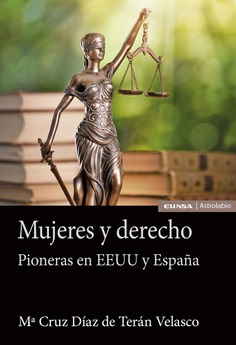
Can a legal system take into account all perspectives, resulting in a desirable full and balanced law, while excluding half of humanity from its development? Positively formulated, what do women bring to the law? Throughout these pages, the author sets out to answer these and other questions related to women and the Law. To do so, she begins by explaining some of the reasons for the absence of women jurists from the 2nd century to the end of the 19th century. From there, she goes on to examine the history of the first women jurists in the United States of America and Spain: who were they, what support did they have and what difficulties did they encounter, did they share the same aspirations, what were their contributions to Law? The aim of this work is to contribute, through the knowledge of women who paved the way, to the writing of that work, still incomplete, which is Women in History.
par Christine Marlet | Avr 18, 2021
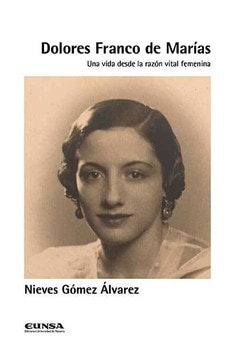
Writer, translator and teacher from Madrid, Dolores Franco de Marías (1912-1977) is best known for having been the most important woman in the life of the philosopher Julián Marías. But while it is true that she was the wife of one of the most outstanding Spanish thinkers of the 20th century and the mother of four children currently involved in Spanish cultural life, this paper would like to highlight her own intellectual value and the extent to which she can also be considered a disciple of José Ortega y Gasset and Pedro Salinas in the Faculty of Philosophy and Letters.
Undoubtedly, her great talents were to make possible a « polished and perfect love » (a very complex art) and to lead a difficult but authentic Spanish life, from a full feminine vital reason, open to the masculine one, in connection with it.



Commentaires récents