par Christine Marlet | Avr 18, 2021
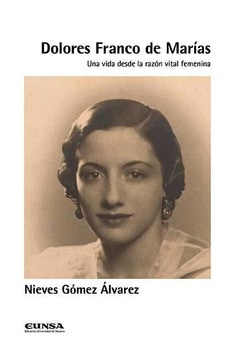
Writer, translator and teacher from Madrid, Dolores Franco de Marías (1912-1977) is best known for having been the most important woman in the life of the philosopher Julián Marías. But while it is true that she was the wife of one of the most outstanding Spanish thinkers of the 20th century and the mother of four children currently involved in Spanish cultural life, this paper would like to highlight her own intellectual value and the extent to which she can also be considered a disciple of José Ortega y Gasset and Pedro Salinas in the Faculty of Philosophy and Letters.
Undoubtedly, her great talents were to make possible a « polished and perfect love » (a very complex art) and to lead a difficult but authentic Spanish life, from a full feminine vital reason, open to the masculine one, in connection with it.

par Christine Marlet | Jan 6, 2021
Purpose – This study aims to explore the nature of women’s career experiences over the life course by examining career patterns, career locus, career contexts, and career beliefs. Design/methodology/approach – A qualitative, inductive approach to data gathering and analysis was employed, using life story surveys, semi-structured interviewing, thematic analysis, grounded theory, codedevelopment and descriptive statistics.

par Christine Marlet | Avr 30, 2019
Study on the effects of PV installations on biodiversity, wondering if solar energy was truly clean

par Christine Marlet | Avr 30, 2019
Flora wrote a paper on the gender-energy-poverty nexus. She argued that the energy transition can reduce poverty under the conditions that women are recognised as the main victims of both lack of energy access and poverty, that women are encouraged to be active actors of the energy transition, and that the wider complexities of the social and political contexts are taken into consideration. She took the concrete example of the Barefoot College to illustrate her point that women are agents of change.

par Christine Marlet | Mar 28, 2019
This paper addresses the impediments faced by women in leadership in Kenya in 2006-2016 as they become transformational leaders.



Commentaires récents